Artificial Electric Light Has Come a Long Way in Nearly 150 Years—How Do We Break Through the Ceiling of the Lighting Industry?
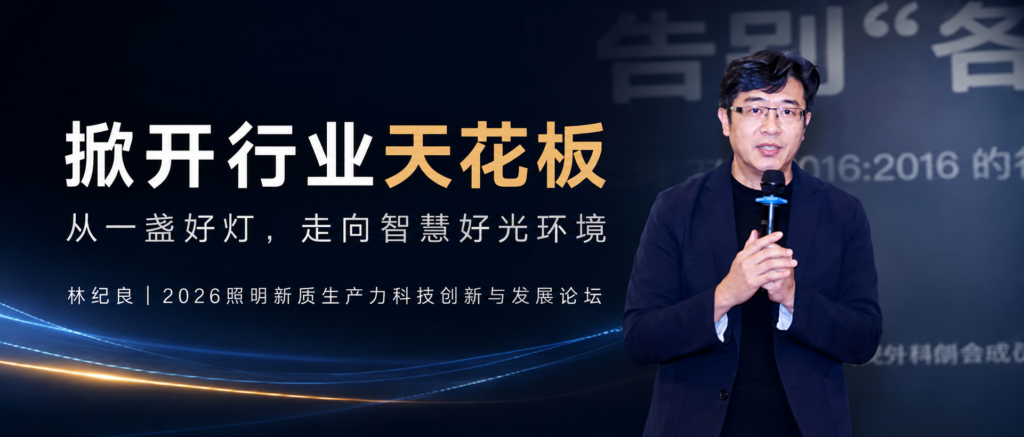
Lawrence Lin
Founder, Lighting Recipe Studio (LRS)
Chairman, Good Light Group Asia (GLGA)
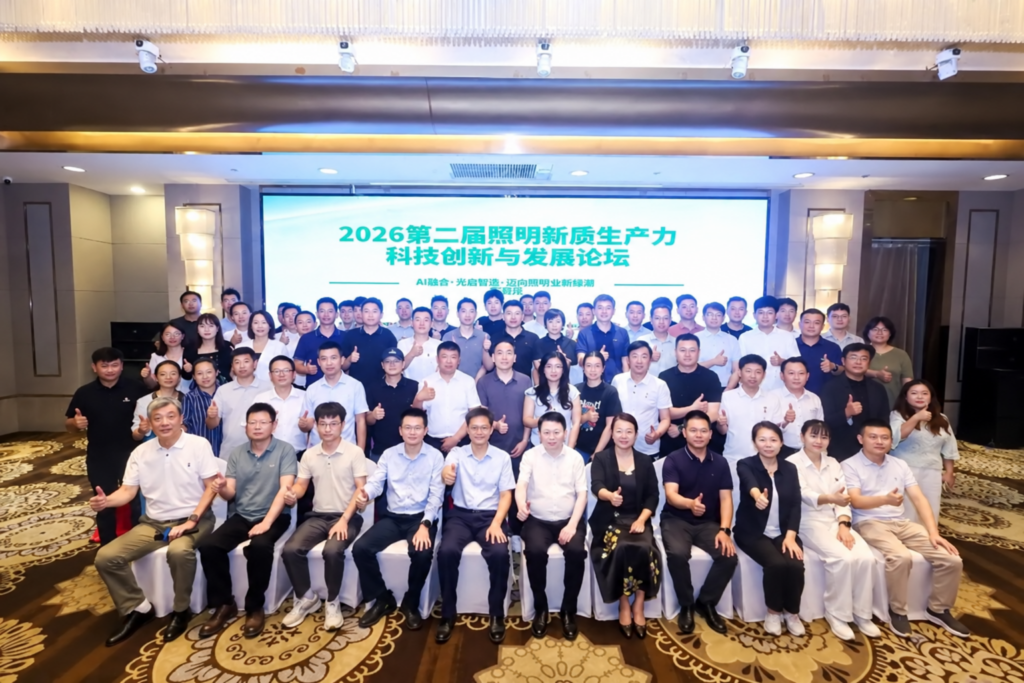
September 3, Nanchang.
At the 2026 Second Forum on New Quality Productive Forces, Technological Innovation and Development in Lighting, Lawrence delivered a morning presentation titled “Beyond Talking Past One Another in Healthy Lighting — The Industry Significance and Implementation Pathway of CIE TN 016:2026.”
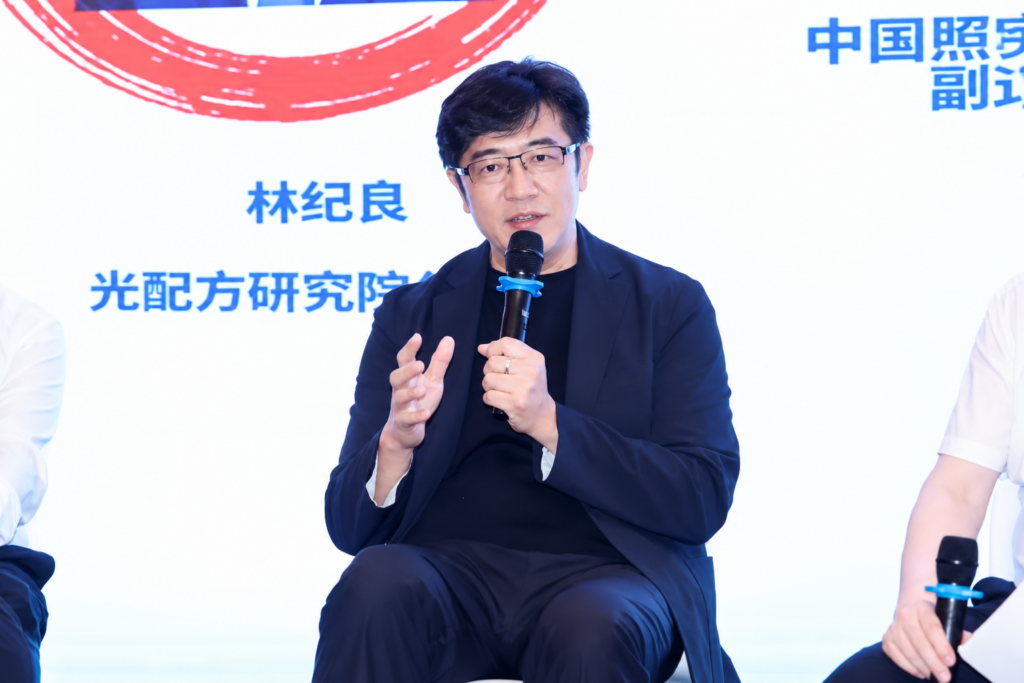
In the afternoon, Lawrence joined a roundtable discussion on “Green Transformation and Technological Innovation Pathways for the Lighting Industry under the Dual-Carbon Goals.”
One event, two seemingly different themes: one focused on health, the other on carbon reduction.
But they ultimately ask the same fundamental question: What problems does the lighting industry still need to solve today—and how can we work together to break through the industry’s ceiling?
CIE TN 016 Is Just One Point of Entry
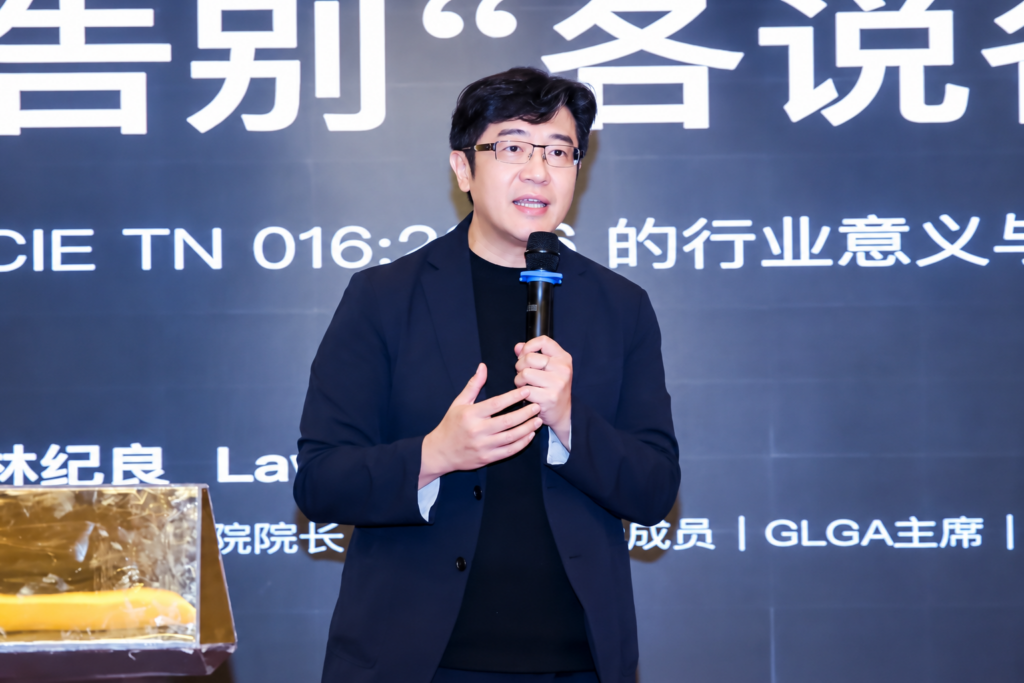
The morning presentation began with CIE TN 016:2026.
This document is not a new “healthy lighting certification standard,” nor does it define what types of luminaires can be called health-oriented products. Instead, it addresses a more fundamental—and long-overlooked—question:
When we use light to study its effects on human beings, what exactly are we recording?
Take two light sources that both provide 500 lx at 4000 K. Their actual outcomes may still differ because of variations in spectral power distribution, eye-level direction, exposure intensity and duration, prior light exposure, and the physiological state of the participants.
If these conditions are not fully documented, studies become difficult to compare and results difficult to reproduce. When research findings are translated into standards, products, and real-world spaces, they can easily be reduced to a few isolated parameters—and may ultimately become a situation where “everyone is speaking their own language.”
What CIE TN 016 is really advancing, therefore, is a common language of evidence.
But this is not the end of the journey.
There is still a long engineering chain to connect: from laboratory data to an LED chip, from the chip to the luminaire, from the luminaire to the space, and ultimately from the space to the light reaching the human eye.
CIE TN 016 is only a point of entry. The real question for our industry is how to create a closed loop connecting scientific research, standards, spectral design, control systems, spatial design, and on-site validation.
Luminous Efficacy Has Improved, Yet the Industry’s Ceiling Remains
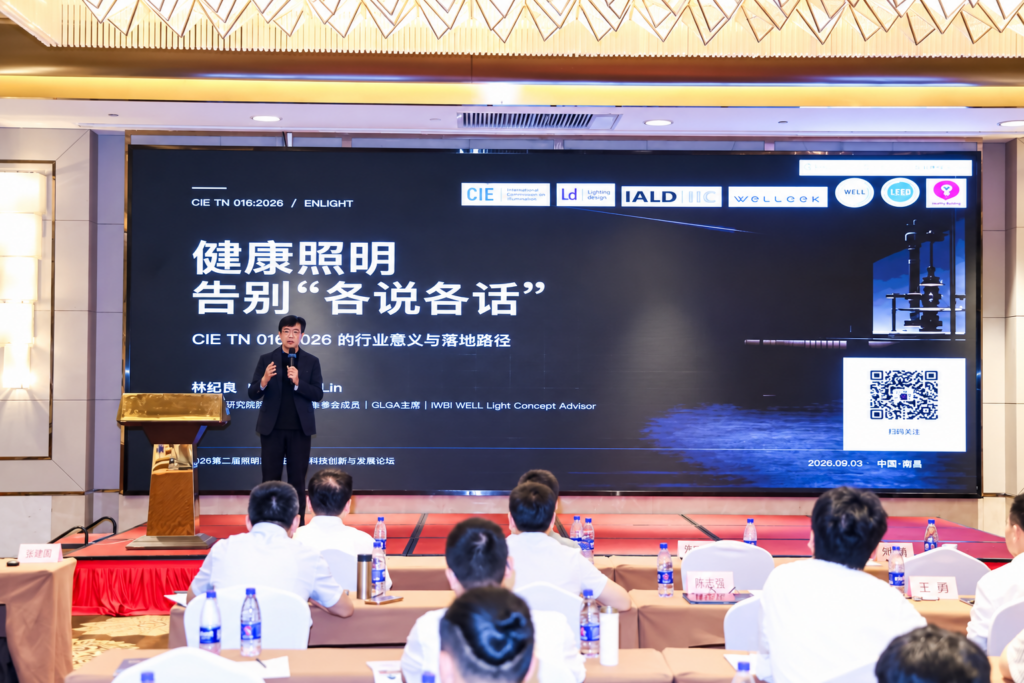
The afternoon roundtable was moderated by Wang Xuhua, Vice Chairman of the China Lighting Electrical Appliances Association.
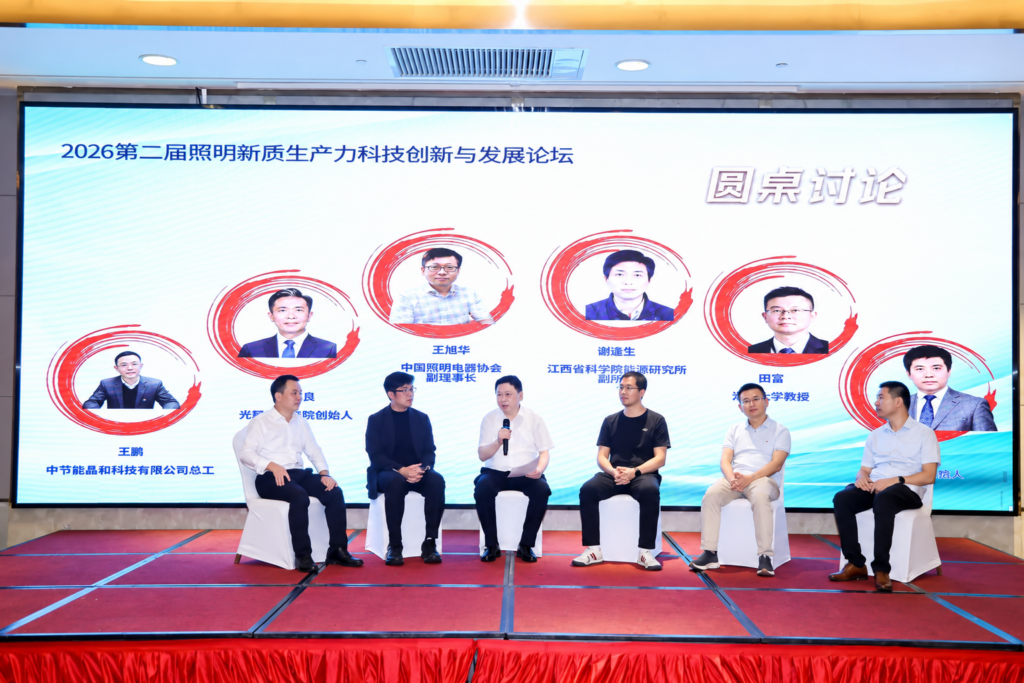
The roundtable focused on the dual-carbon goals, but Lawrence raised a point during the discussion: we cannot define the dual-carbon agenda simply as continuing to increase LED chip efficacy, nor can we equate green transformation with replacing a generation of old luminaires with newer, more energy-efficient ones.
Over the past several decades, LEDs have driven a remarkable revolution in light sources.
From incandescent and fluorescent lamps to semiconductor lighting, we have continuously improved luminous efficacy, reduced power consumption, and extended service life. Today, the luminous efficacy of an LED can far exceed that of traditional light sources.
But improving product efficiency does not necessarily mean improving the efficiency of a building’s lighting system.
A highly efficient luminaire does not mean it is switched on at the right time. And integrating a smart control system does not necessarily mean that its control logic truly understands whether people are present, what they are doing, or what kind of light they actually need at that moment.
Likewise, energy efficiency is not simply about switching off more lights or dimming them further.
True energy efficiency means providing the right amount of light—neither insufficient nor excessive—to people engaged in specific activities, at the right place and at the right time.
This is the shift from “luminous efficacy” to “system-level performance,” and it is the next ceiling that the lighting industry needs to break through.
Nearly 150 Years of Artificial Electric Light: We Are Still Learning How to Use Light
Modern artificial electric light has been with us for nearly 150 years.
It is not that we did not understand that light is connected to people. Rather, for much of that time, we lacked the fundamental conditions and engineering capabilities needed to truly connect these relationships.
We could not readily change spectral characteristics in real time. Sensors, digital communications, and computing platforms were either unavailable or too costly. Products, buildings, controls, and human research each spoke their own technical language. Even though we understood that natural light changes throughout the day, it was difficult to make artificial lighting dynamically respond to those changes within real buildings.
As a result, traditional lighting developed its evaluation systems around the “lamp”:
How many lumens?
How many watts?
What is the luminous efficacy?
What is the illuminance?
What is the color temperature?
All of these parameters are important. But they are not enough to answer another, more fundamental question:
What, ultimately, is the light that reaches the human being?
Today, the conditions are changing.
Semiconductor lighting has made spectrum, intensity, and temporal patterns increasingly controllable. Sensors allow us to perceive the environment and human activity. AIoT enables devices, spaces, and cloud platforms to connect. Digital twins and data analytics give lighting systems the potential to continuously learn and optimize.
For the first time, we have a real opportunity to connect five dimensions:
Light. People. Space. Time. Activity.
These are not five independent labels.
Where a person is, at what time, and what they are doing determines what kind of light they need. And after light passes through luminaires, building surfaces, and the surrounding space, the actual exposure that ultimately reaches the eyes determines the real visual, physiological, and behavioral experience.
If any link is missing, “smart lighting” may become little more than connected devices; “healthy lighting” may become little more than a collection of product specifications.
Dual-Carbon and Health Are Not Two Separate Paths
The dual-carbon agenda asks us to reduce waste. Health asks us to become more precise.
On the surface, one is about energy and the other about people. In reality, both point toward the same system capability:
Delivering good light when and where it is needed.
A good lighting environment is not necessarily one that is brighter at all times. Nor does it mean maximizing mel-EDI, color temperature, or any single spectral metric.
During the day, people may need sufficient visual illumination together with appropriate circadian stimulation. In the evening and at night, systems should reduce unnecessary light exposure. In unoccupied areas, lighting should respond accordingly. And across different scenarios—precision work, rest, communication, or care—the light should adapt to the activity.
When light is delivered precisely to where it is needed and at the time it is needed, health and energy efficiency no longer have to be opposing objectives.
Health moves lighting from “Is there light?” to “Is the light appropriate?”
The dual-carbon agenda pushes the industry from asking “How many lights have we installed?” to asking “Can we achieve better outcomes with fewer resources?”
Together, these forces are driving lighting away from selling products and toward delivering system-level value.
What We Truly Lack Is an Engineering Language
Today, technology has already moved ahead. What constrains the industry is increasingly not a particular chip, material, or control protocol.
What we need to solve is how to connect the entire chain:
How does product data enter the design process?
How is design intent communicated to the control system?
How are control outcomes measured in real spaces?
How is a person’s actual light exposure recorded?
And how can health, comfort, energy consumption, and carbon emissions be validated through comparable methods?
This requires an engineering language capable of connecting all stakeholders:
From source SPD to luminaire photometry;
from horizontal illuminance to actual eye-level exposure;
from static parameters to temporal patterns;
from device control to human activity;
from design objectives to on-site validation;
and ultimately, from one-time project delivery to continuous monitoring and optimization.
Only when this chain of evidence is established can scientific research move beyond academic papers, standards move beyond written provisions, and smart controls move beyond demonstration projects.
For businesses, this is also the foundation for a transformation in business models.
In the future, lighting companies may deliver more than luminaires. They may deliver designed, commissioned, measured, and continuously optimized lighting environments.
Competition will gradually shift away from individual product specifications toward verifiable outcomes in real spaces.
The Ceiling Will Not Open by Itself
At the roundtable, Lawrence called on industry leaders, researchers, designers, manufacturers, testing organizations, and control-platform providers to work together to break through the ceiling of the lighting industry.
This is not a slogan.
Lighting already has highly efficient light sources, intelligent controls, sensors, communication technologies, and artificial intelligence. But turning these capabilities into genuinely good light in buildings still requires us to build the standards, data, engineering, and validation systems that connect them.
No single company can accomplish this alone. Nor should any one metric or any single standard attempt to do everything.
We need to preserve the rigor of scientific research while understanding the realities of engineering. We must prevent health-related concepts from becoming the subject of excessive marketing, while also recognizing that imperfect evidence should not become an excuse to stop exploring and practicing.
Modern artificial electric light has been with us for nearly 150 years.
In the past, we focused primarily on solving the question of how to manufacture light.
Today, we finally have the opportunity to answer a deeper question:
How do we deliver the right light, to the right people and spaces, at the right time?
This is the historic opportunity that semiconductor lighting and AIoT have given our generation of lighting professionals.
Together, we should bridge the remaining gaps between research, standards, products, spaces, and validation—to break through the next ceiling of the lighting industry and bring truly healthy, comfortable, efficient, and sustainable light into the lives of billions of people.
Perhaps this is the direction in which the “new quality productive forces” of lighting are most worth looking toward.

 English
  Chinese (Taiwan)
  Chinese (China)
  German