
A perspective from Lighting Recipe Studio on platform IP, strategic positioning, and the future of the lighting industry
If the future of lighting remains limited to “selling hardware,” it will be difficult for the industry to command higher value. But if light can be turned into a platform, into algorithms, into data, and into a verifiable human-centric system, then it is no longer just a product. It becomes foundational infrastructure for the next generation of space, health, and environmental technologies.
That is the core value behind Lighting Recipe Studio’s latest patent progress and broader IP strategy.
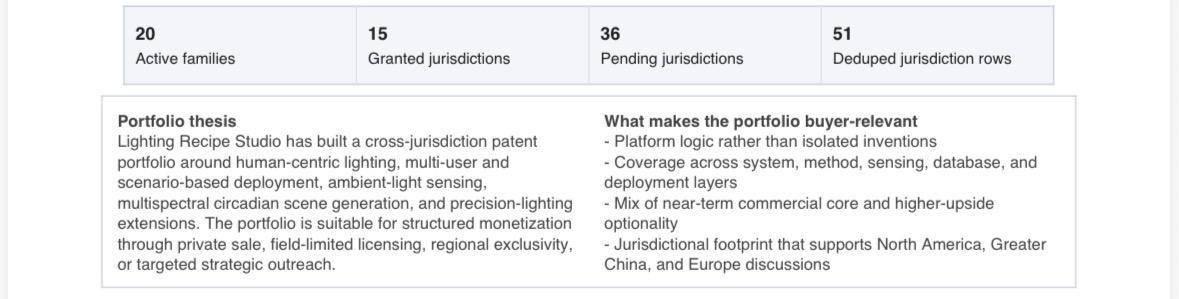
Introduction: Many companies think patents are about protecting products. In reality, what determines future positioning is higher-order patent strategy and system architecture.
Many business leaders still view patents primarily as a defensive tool. Patents make products safer to commercialize. They strengthen marketing claims. They make copying more difficult.
All of that is true. But if that is the full extent of how a company understands patents, then it is significantly underestimating their strategic importance.
In high-value industries, what determines future positioning is no longer simply whether a company owns a few isolated inventions. What matters far more is whether it has built a coherent higher-order patent structure — one that is aligned with the future direction of the industry, expandable over time, and capable of covering products, systems, and platforms downstream.
Put simply:
A point patent protects a function. A higher-order patent strategy helps define an entire competitive domain. A narrow patent may protect a component, a module, or a localized technical improvement.
But a top-level architectural patent strategy competes for something much larger:
- product definition power
- system integration power
- platform extension power
- and, ultimately, influence over how the industry evolves
This is why Lighting Recipe Studio has never focused only on making a lamp brighter or more efficient.
Our long-term effort has been directed toward something much more fundamental: building the underlying technological architecture for the next generation of lighting.
After our latest patent grants, one thing has become even clearer: what will be scarce in the future is not lamps — but platform-level IP
Today, the lighting industry still appears to compete largely on products, parameters, pricing, and efficiency. But those are still mostly hardware-era dimensions of competition.
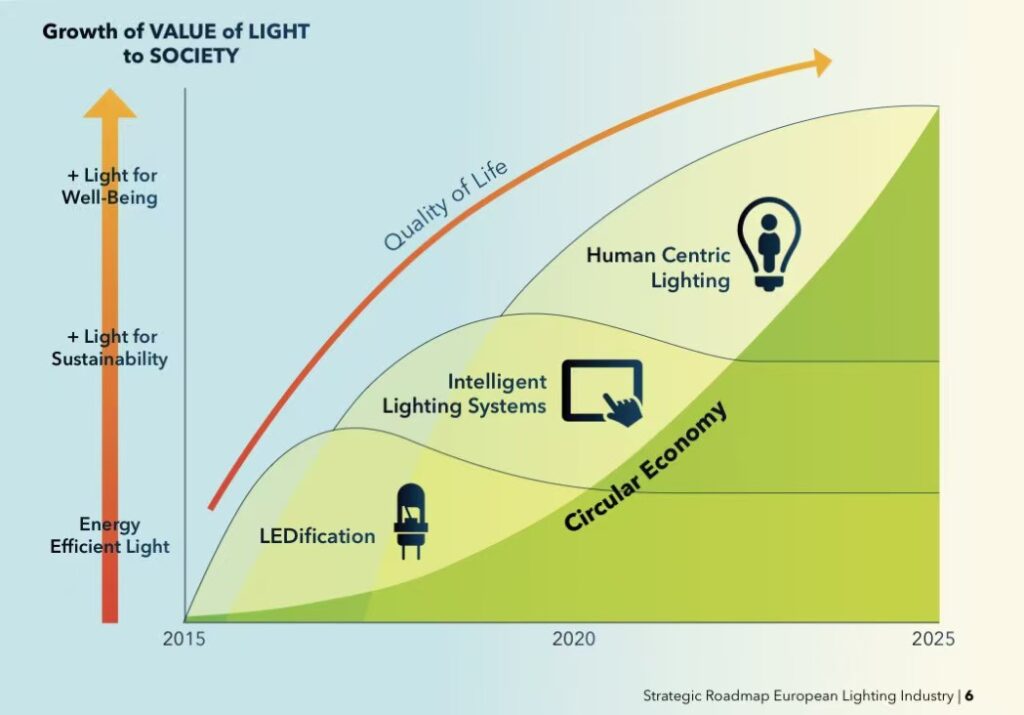
What will determine the next phase of value creation is something else entirely: who can establish a foundational technology platform built around
- human needs
- spatial scenarios
- sensing and control
- algorithmic and data-driven intelligence
- and verifiable outcomes
This is the real reason behind our continued patent development.
At Lighting Recipe Studio, we are not only interested in how to make lighting products. We are interested in how to turn light into a system capability — something that can be understood, modeled, computed, orchestrated, adapted, and verified.
With several key patent grants added this year, the picture is becoming increasingly clear: What we are building is not a collection of disconnected feature patents.
It is a structured portfolio of higher-order patents centered around how the lighting industry itself is likely to evolve. The value of such a portfolio does not lie in protecting a single clever idea. Its value lies in becoming an entry point for future products, systems, platforms, and strategic collaboration.
We are not building protection around a product feature. We are building the technological architecture for next-generation lighting.
Many patents fail to create real industrial value not because the technology is weak, but because the scope is too narrow. Such patents may be defensible, but they are difficult to scale. They may be grantable, but they do not necessarily shape the market.
Lighting Recipe Studio has taken a different approach. Rather than adding isolated technical patches around individual functions, we have been structuring IP around a more fundamental question: How will lighting evolve in the next decade?
That means protecting not just one product concept, but building what could be described as a human-centric lighting technology stack.
This is also why our portfolio is particularly relevant for:
- technology licensing
- joint development
- platform integration
- industrial collaboration
- capital partnerships
- strategic transactions and asset-level cooperation
Its value is not limited to protecting a product. Its value lies in defining the boundaries, pathways, and interfaces for future categories of products and systems.
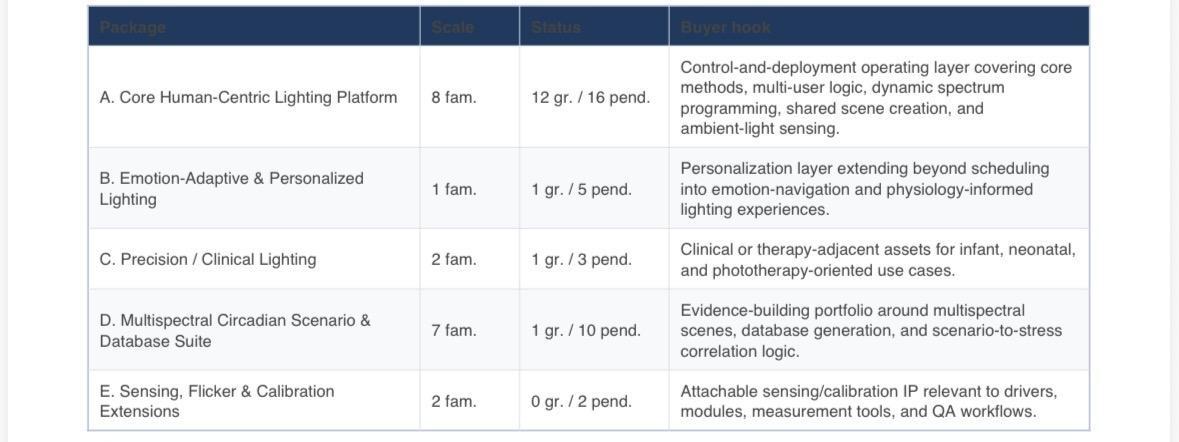
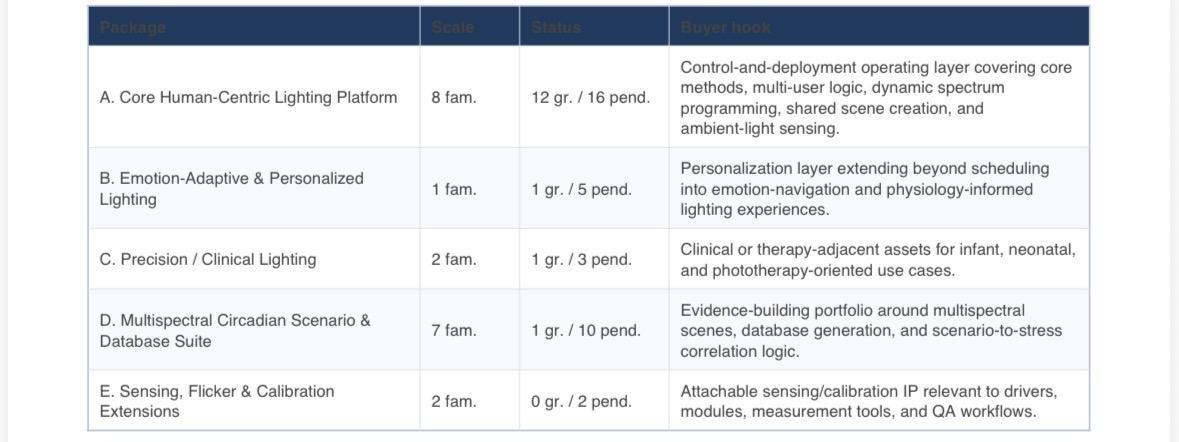
1. Core human-centric lighting platform: from device control to system definition
This is the structural backbone of the portfolio and one of the clearest examples of higher-order patent positioning. It is not about simple dimming or tunable white control.
It is about enabling lighting systems to function at a higher level, including:
- control logic linked to space and scenario
- coordination mechanisms for multi-user environments
- editable and deployable spectral and scene orchestration
- shared scene logic and platform-based invocation
- dynamic feedback through ambient-light monitoring
The deeper significance of this type of IP is that it moves lighting from device-layer competition to system-layer competition.
The companies that master this layer are more likely to gain:
- product definition power
- system integration leverage
- platform interoperability advantage
- and scenario extension capability
That is what makes higher-order patents so important. They do not merely protect a part. They protect the architectural method, the system pathway, and the entry point.
For the industry, this kind of IP is valuable because it can be integrated not only into luminaires, but also into control systems, sensing modules, IoT platforms, smart-building frameworks, and even health-oriented space solutions.
2. Emotion-adaptive and personalized lighting: from standardized output to state-responsive systems
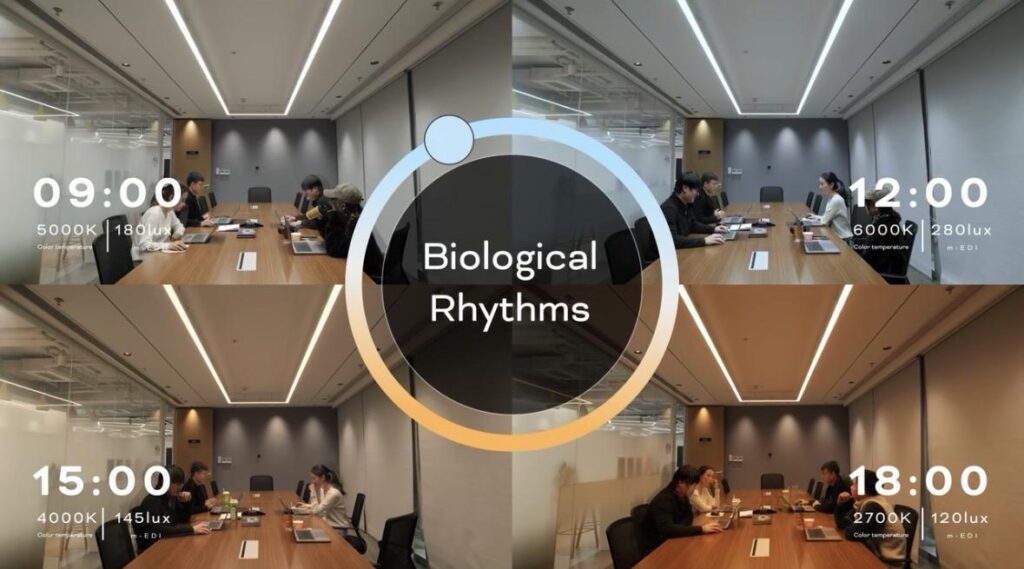
Much of the industry still talks about healthy lighting in relatively basic terms — correlated color temperature shifts, time-based schedules, and circadian timing. But the future will not be defined by whether a system can switch between warm and cool white.
It will be defined by whether lighting can respond intelligently to the condition of the person. Stress, emotion, preference, behavioral pattern, and daily rhythm all shape how light should intervene.
That is why part of Lighting Recipe Studio’s IP strategy has focused on a higher-order direction: transforming lighting from a fixed-output system into an adaptive, person-responsive system.
This matters because it creates bridges between lighting and adjacent sectors such as:
- health technology
- digital wellness
- consumer electronics
- intelligent environments
- automotive interiors
- and even digital therapeutics
The most valuable lighting systems of the future will not simply deliver illumination. They will interpret human state, match intended purpose, adjust the light environment dynamically, and improve over time. Whoever establishes this architecture early will have a strong position in future cross-industry convergence.
3. Precision and clinical lighting: from general illumination to high-value professional systems
Once lighting begins to connect more directly with measurable human outcomes, it stops being merely a building component and starts becoming part of a professional system.
This is another strategic direction that Lighting Recipe Studio takes seriously: moving light from general-purpose use into higher-value, higher-threshold application domains.
This includes areas such as:
- infant and child lighting regulation systems
- intervention-oriented lighting methods
- precision lighting capabilities for healthcare, care environments, sleep, and recovery settings
The significance here is substantial. As soon as light becomes more clearly linked to physiological, behavioral, or health outcomes, its value position changes. It is no longer just part of equipment procurement.
It becomes closer to:
- a professional solution
- an outcome-oriented system
- a high-value entry technology
- a collaborative platform for health and care ecosystems
This is not the kind of value that one or two product launches can fully absorb. It is more likely to expand through joint development, clinical collaboration, and sector-specific strategic partnerships.
4. Multispectral circadian scenarios and databases: from emitting light to owning the content and data layers
A great deal of what is marketed today as circadian lighting still amounts to little more than timed schedules and CCT transitions.
But if lighting is to genuinely respond to rhythm, stress, purpose, and state, then a much deeper system layer is required, including:
- multispectral circadian scenarios
- methods for building scenario databases
- relationships between lighting conditions and indicators such as stress or psychological state
- scenario generation, recall, and ongoing optimization
This changes the nature of competition. Future competition in lighting may not only take place in luminaires.
It may increasingly take place in:
- who owns the scenario layer
- who owns the database layer
- who owns the algorithmic logic
- who owns the optimization engine
This is exactly why higher-order patent positioning matters. Once lighting expands from hardware into content and data, business models change. Valuation models change. The role of a company within the industry changes.
Selling a luminaire is one thing. Owning the content layer and the data layer is something far more strategic. It enables the shift from one-time product sales toward service, platform collaboration, ongoing optimization, and long-term value capture.
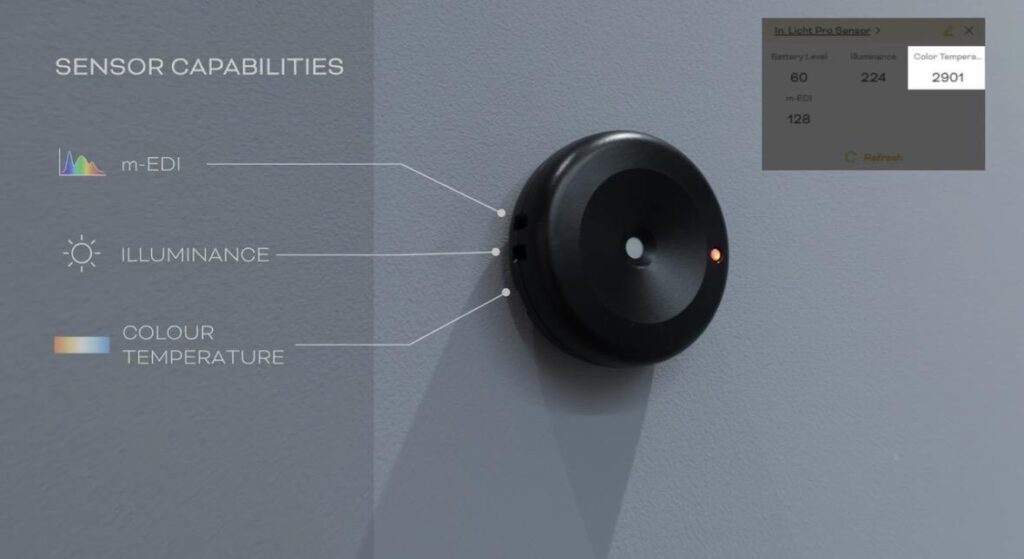
5. Sensing, flicker, and calibration extensions: making the platform real, deployable, and verifiable
No platform can become mainstream if it relies only on idealized settings.
A true platform must be able to:
- sense the field condition
- correct deviations
- maintain consistency
- support verification
That is why Lighting Recipe Studio has also continued to build IP around areas that may appear secondary, but are in fact essential to industrialization, including:
- flicker-related monitoring and control
- LED spectral auto-calibration
- integration with modules, drivers, measurement systems, and quality workflows
These elements matter because they determine whether a platform can move from concept to deployment. Many ambitious solutions remain trapped at the demonstration stage not because the vision is weak, but because the supporting architecture for calibration and verification is missing.
The value of higher-order patents is not only that they describe a future vision. It is that they help create the technical foundation required to make that vision work in the real world.
A real platform is not one that only tells a compelling story. It is one that can operate in complex environments, remain consistent across different systems, and support validation across real applications.
What Lighting Recipe Studio is really trying to solve is not just how to illuminate space — but how to create a new technical language for the industry.
For too long, the lighting industry has concentrated most of its effort on equipment, metrics, and efficiency. These matter. But they are no longer enough. If the industry continues to understand light only through a hardware vocabulary, it will struggle to enter higher-value domains.
Today, more and more companies are talking about health, comfort, rhythm, experience, and scenario. But in many cases, these remain marketing narratives rather than fully structured technical systems.
This is precisely the reason behind our continuing IP work: to ensure that light is not merely switched on, but understood, modeled, orchestrated, adapted, and verified.
Once that technical language is established, the impact extends far beyond a single product generation. It begins to shape the infrastructure of the industry’s next upgrade cycle.
Whoever masters that language first will be better positioned to become a central node in future collaboration. Whoever builds that architecture first is more likely to move from participating in competition to defining it.
Why this type of top-level patent strategy matters for the future of the industry
Because every maturing industry eventually shifts from “who can make it” to “who can define it.”
In the early stage of an industry, competition tends to revolve around:
- 效率
- cost
- speed
- channel access
But as industries become more platformized, systemized, and intelligent, the key questions change:
- Who defines the system architecture?
- Who controls the critical interfaces?
- Who sets the collaboration framework?
- Who owns the most extensible technical boundary?
- Who can transform isolated capabilities into platform capabilities?
A higher-order patent strategy is fundamentally about competing for those rights. Its importance lies not only in determining whether a company can launch a product. It helps determine how the industry itself will be organized, integrated, and commercialized. In that sense, patents are no longer just about preventing imitation.
They are increasingly about:
- future market access barriers
- negotiating leverage in partnership
- the foundation for platform integration
- sources of strategic premium
- and long-term influence over industry positioning
Business leaders who understand technology strategy do not see patents merely as R&D outputs. They see them as instruments of future positioning.
For business leaders, the importance of patent strategy is not just protection — it is positioning.
If a company still treats patents only as an auxiliary task of the R&D department, it may remain a participant in future competition, but it is less likely to lead it. Because the more valuable companies of the future will not only possess manufacturing capability.
They will also possess:
- architectural capability
- platform integration capability
- system extension capability
- industrial collaboration capability
- and IP control capability
The importance of a patent strategy does not lie in how many patents are filed. It lies in whether the portfolio has a clear top-level logic.
Can it cover the direction of industry evolution? Can it become difficult to work around? Can it become an interface that future partners must engage with?
That is what strategic IP really means. And that is the dimension along which Lighting Recipe Studio has been positioning itself.
The earlier management teams understand this, the greater their ability to secure a strong role in future industry integration and technology transition. The later they understand it, the more likely they are to become merely an execution layer within someone else’s architecture.
Closing reflection: while much of the industry is still competing through products, the real competition is already moving toward foundational architecture
The lighting industry will, of course, continue to compete through products. But product competition alone will not define the next stage.
What will become truly scarce is not a lamp that is slightly brighter, cheaper, or more efficient. What will become scarce is the capability to turn light into a platform, into a system, into algorithms, into data, and into verifiable outcomes.
That is why Lighting Recipe Studio has never regarded patents simply as certificates of invention.
We see them as a way to participate in defining the future rules of the industry — through higher-order patents and foundational architecture. The most valuable patents are not the ones framed on a wall. They are the ones that enter real systems, real partnerships, and real industrial structures — and ultimately help shape future competitive dynamics.
Seen from this perspective, patent strategy is not merely a legal matter or an R&D matter. It is a strategic matter. A future-position matter. And, increasingly, a matter of industrial influence.
We are not interested in displaying patents. We are interested in enabling collaboration and industry-scale value creation.
For Lighting Recipe Studio, patents are not the end point. They are the starting point of industrial collaboration.
The questions we care about are straightforward: Can these technologies enter real environments? Can they create differentiated advantage for partners? Can they become the basis for product, system, and platform collaboration? Can they help turn “good light” from a concept into a scalable, verifiable industrial capability?
If your organization is working in areas such as:
- human-centric and healthy lighting
- smart lighting control
- multispectral circadian lighting
- sensing and closed-loop control
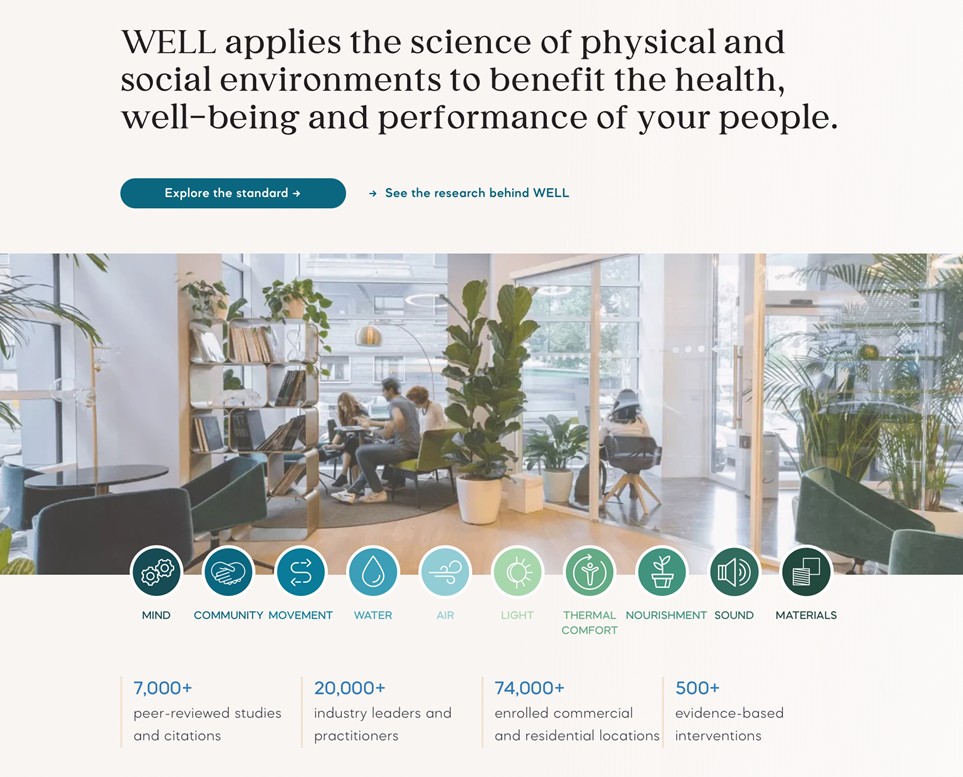
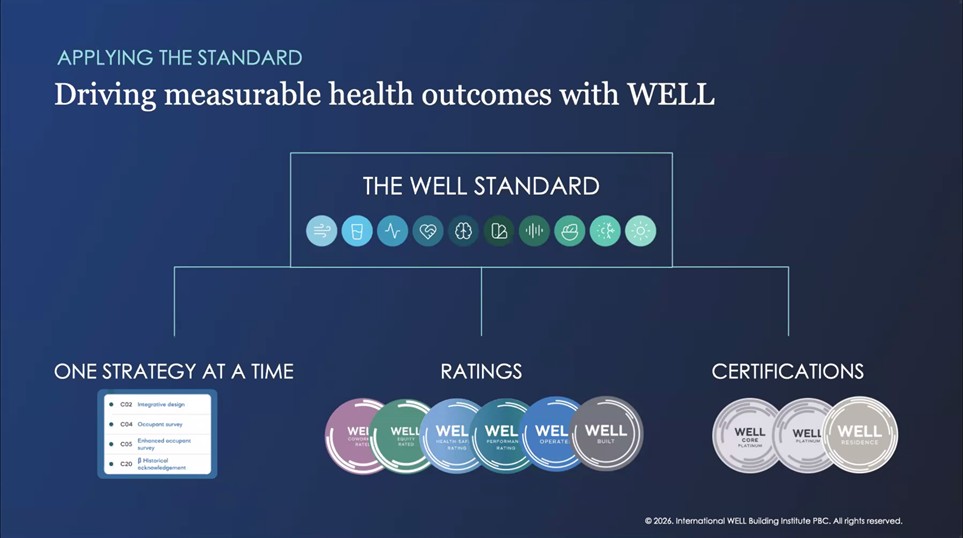
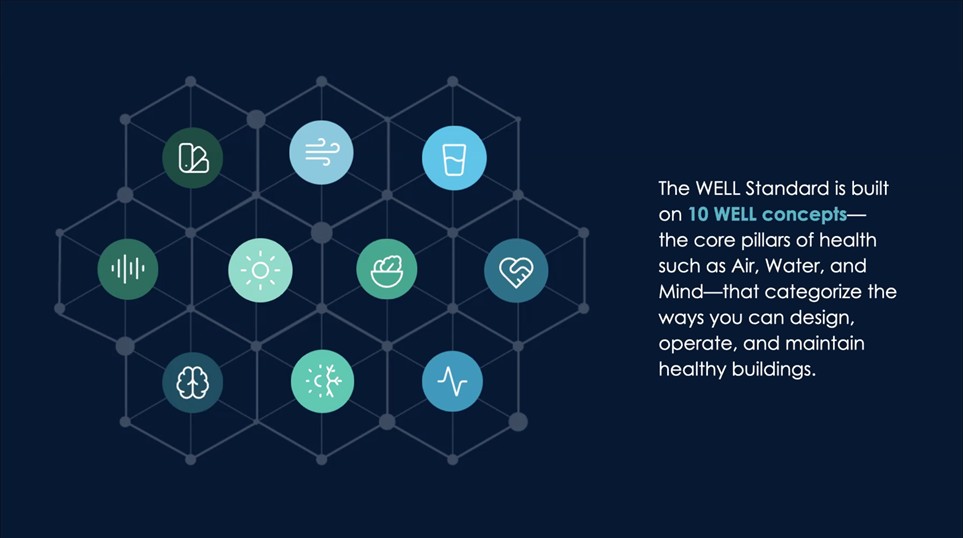
- WELL, healthy buildings, sleep, or medical lighting
- technology licensing
- joint development
- platform collaboration
- strategic integration
- capital or asset-level cooperation
we would be glad to connect. We believe the scarcest asset in the next phase of the lighting industry will not be a standalone product. It will be platform-level IP capable of defining future system architecture.
And that is exactly why Lighting Recipe Studio continues to invest in higher-order patent strategy.
最後一句
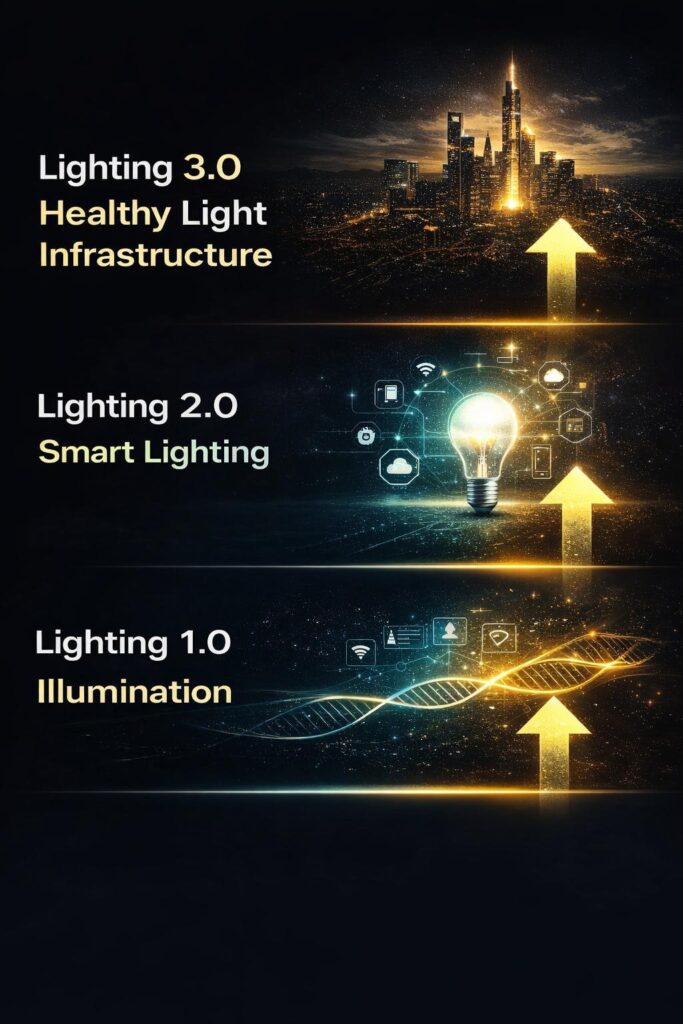
Lighting is no longer just about illumination. It is becoming infrastructure for human vitality.

















 English
  Chinese (Taiwan)
  Chinese (China)
  German