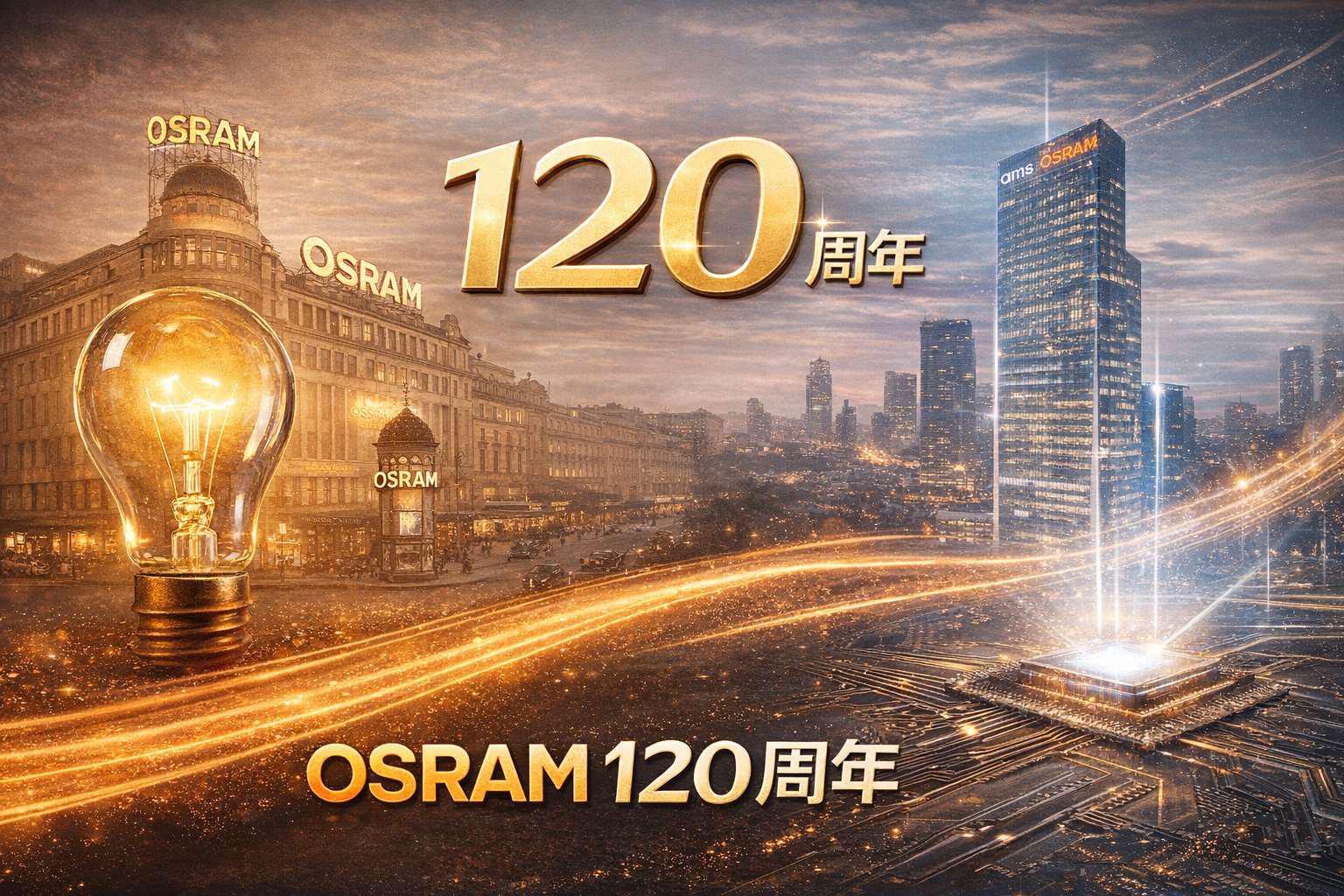
From technological leadership and brand power to fragmented, close-range competition — this is not only the story of OSRAM/LEDVANCE, but a lesson every former market leader should study.
Introduction
This year, OSRAM marks its 120th anniversary.
For many, OSRAM is a great German lighting company. But in my view, seeing it only as a “legacy lighting brand” does not go nearly far enough.
OSRAM was never just a company, and never just a brand. It participated in almost the entire arc of modern lighting history: from incandescent lamps, fluorescent lamps, and halogen, to LED, automotive lighting, infrared, sensing, and today’s broader world of photonics and digital light technologies.
Yet what is even more worth revisiting than its history is the path it has taken over the past decades: from being a technology-led oligopolist in a seller’s market — where growth could often be unlocked simply by expanding capacity — to becoming a company forced to fight, market by market, against thousands of competitors in highly fragmented global battlegrounds.
Was that outcome inevitable because the industry changed? Or was it also the result of strategic misjudgment?I believe the answer is both.
But the more important question for today’s business leaders is this: when a company has spent decades at the top, can it still reinvent the way it wins?
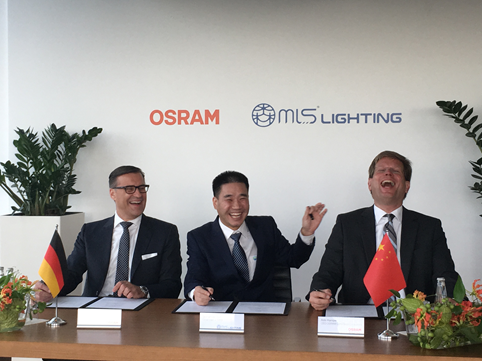
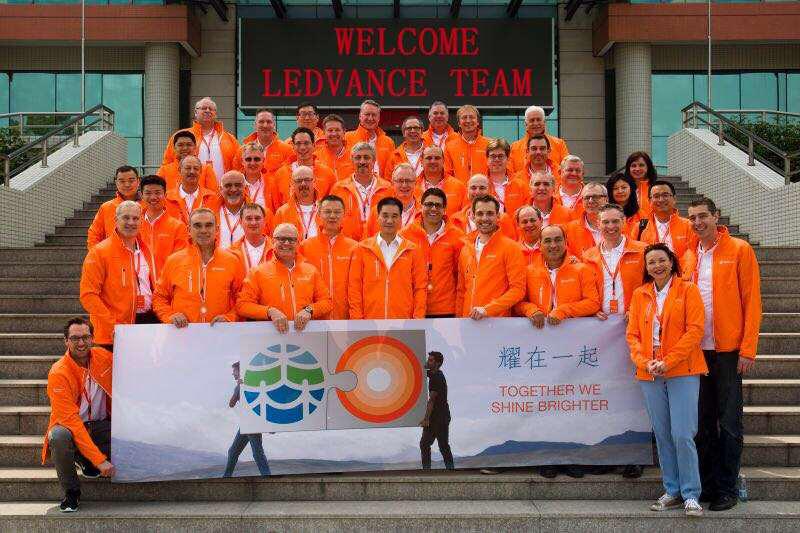
I was not an original OSRAM employee. But I was deeply involved in the LEDVANCE chapter — from my role as Managing Director within MLS to later serving as CEO of LEDVANCE. I witnessed, from inside the process, how industrial power, brand architecture, channel logic, and competitive rules were all being rewritten.
So this is not intended to be a simple anniversary tribute. Rather, I want to use OSRAM at 120 as a lens to reflect on the evolution, the challenges, and the lessons of a century-old oligopolist.
1. OSRAM’s greatness was never just that it was “old” — it once represented an entire industrial era
The name OSRAM carries the imprint of the industrial age. It was not a startup story in the modern sense.
It was born out of a period of deep European industrial consolidation. And because of that, OSRAM never sold only “lamps.” It sold a complete industrial capability:
- materials expertise
- manufacturing scale
- process know-how
- quality control
- standards and certification
- brand trust
- global distribution reach
In the era of traditional lighting, these capabilities created a very high barrier to entry. Not everyone could do it. Fewer still could do it reliably, globally, and at scale. That is why OSRAM was not simply a “large company.” It occupied a genuine industry high ground.
For a long time, it stood for: stronger technology, more stable quality, broader product portfolios, and greater authority in the market. This is why, when we look at OSRAM today, we should not start with what it later struggled with.
We should first acknowledge what it once truly was: one of the defining winners of its age.
2. From seller’s market to buyer’s market: many giants did not suddenly become weak — the rules of the game changed
To understand the later challenges faced by OSRAM and LEDVANCE, we must begin with one simple truth: this was, first of all, an industry transition that was structurally inevitable.
In the era of traditional light sources, the industry had several defining characteristics: First, technological and manufacturing barriers were high.
Second, brands and channels were highly concentrated.
Third, demand grew steadily over long periods.
Fourth, the number of global competitors was limited, and the market remained, in essence, a seller’s market.
In that context, if a market leader had strong technology, a trusted brand, and broad channels, growth often really was a matter of capacity expansion.
Then LED changed everything. LED looked like a source substitution, but in reality it rewrote the foundations of the entire industry:
- technology diffused faster
- manufacturing became more replicable
- products became more commoditized
- costs declined more quickly
- supply chains became more global — and more China-centered
- the number of market participants surged
- channels became more fragmented
- price competition became more direct and more frequent
What had once been a long-distance race among a handful of dominant players gradually turned into a crowded battlefield with thousands of companies competing across markets.
So what OSRAM and LEDVANCE later faced was not simply “more competition.” It was something deeper: the lighting industry collapsing from a technology-driven seller’s market oligopoly into an overcompetitive buyer’s market.
That was not caused by any one company alone, nor by the arrival of any single competitor. It was the result of a structural rewrite of the industry itself.
3. But it would be too easy — and too unfair — to explain everything by saying “the times changed”
If this were only fate, then all legacy giants should have lost momentum in exactly the same way. They did not.
Which brings us to the second layer of analysis: industry change may have been inevitable, but how a company responds determines whether it adapts or gets trapped.
In my view, the most valuable lesson from OSRAM and LEDVANCE is not merely that margins were squeezed or competitors multiplied. It is that every former oligopolist must ask itself a harder set of questions:
- Has core technology continued to evolve?
- Has the next generation of technology been actively built and prepared?
- Were those technologies decisively brought to market?
- Has the organization been upgraded to match the new pace of competition?
- Has the Go-to-Market model truly respected the differences between markets?
- Have brand-building and channel-building been centered on markets — or have they remained centered on headquarters?
These are the questions that matter most. Many companies do not fail because they cannot see the future. They fail because they assume that the logic that made them successful in the past will remain sufficient in the future.
4. First lesson: technology cannot merely have been leading once — it must keep evolving and keep converting into market power
One of the easiest traps for an oligopolist is to treat technological leadership as a static asset. Being ahead once does not mean remaining ahead. Having the capability to develop technology does not mean having the speed to commercialize it. Owning R&D capacity does not mean having the organizational ability to turn it into new market order.
The real issue is never simply whether a company has technology. The real issue is this: Can it continuously push the next generation forward, and can it decisively translate technical reserves into market capability?
Many former leaders did not lack R&D, patents, labs, or engineering talent. What they often lacked was:
- the willingness to accelerate the next wave
- the speed to bring emerging technologies into the market
- the organizational structure to support the transition
- the ability to form a new business system around the new technology
This is why some companies later seem, from the outside, to be neither weak nor obsolete — only late. Not incapable, but too slow. Not technically empty, but commercially under-converted.
For any former oligopolist, technology leadership that does not keep renewing itself — and does not keep converting into market advantage — eventually turns from moat into museum piece.
5. Second lesson: what often drags down former oligopolists is not the number of competitors, but the collapse of their decision model
This, to me, is one of the most important lessons. Many global leaders build a highly centralized operating logic during their strongest years:
- headquarters defines the products
- headquarters defines the brand
- headquarters defines the pricing architecture
- headquarters defines the pace
- regional teams execute
In an era of supply scarcity, strong brands, and relatively stable product structures, this model can be highly efficient. But once markets start to differentiate sharply, it begins to fail.
Because market reality is never uniform:
- price sensitivity differs
- buying behavior differs
- channel power structures differ
- engineering vs. retail mix differs
- competitor density differs
- service expectations differ
- SKU complexity differs
- decision chains differ
If a company continues to govern everything from a headquarters-centered logic, three things tend to happen: First, local demand gets underestimated. Second, decision speed falls behind market speed. Third, regional teams gradually lose their fighting capability.
At that point, the issue is no longer one bad product or one weak market. The issue is that the entire decision model has become unfit for the environment.
Many former oligopolists do not lose because they lack resources. They lose because: their response speed becomes slower than the speed of market change.
6. Third lesson: brand and channel strategy cannot only answer to headquarters — they must answer to market outcomes
This is another area where multinational companies often misread the challenge. Headquarters tends to look at branding through the lens of consistency. Markets judge brands through the lens of effectiveness. Headquarters wants one unified narrative, one unified image, one unified asset system.
But markets ask different questions:
- What does this brand actually mean here?
- Does it influence specification or procurement?
- Does it help channels make money?
- Is its positioning clear enough across price segments?
- Can it still compete meaningfully against local rivals?
The same brand can mean very different things in different markets. In mature markets, it may signal reliability and quality. In emerging markets, it may first be compared on price. In project markets, it may need to win through technical support and delivery performance. In retail, it may need to fight through shelf presence, promotions, e-commerce traffic, and consumer education.
That is why brand strategy cannot only pursue global uniformity; it must also pursue local effectiveness.
The same applies to channels. Strong channel-building is not about replicating the headquarters’ ideal blueprint around the world. It is about respecting the actual power structure, economics, and operating logic of each market.
Global brands absolutely need unified direction. But market competition must respect local reality.
If the brand answers only to headquarters, and the channel does not answer to the market, then even the strongest historical asset will slowly be consumed.
7. Fourth lesson: stronger headquarters control does not necessarily mean stronger market control
At their peak, many companies naturally fall into a dangerous assumption: the more tightly we control the organization, the more securely we control the market.
But these are not the same thing. Headquarters control may produce process discipline, brand coherence, and risk management. Market control, however, is reflected in something else:
- whether the front line is respected
- whether local teams are empowered
- whether products can be adjusted quickly
- whether price and channel strategies can react in real time
- whether branding can adapt to local competition
- whether decisions are made where the competition actually happens
When markets become more fragmented and more immediate, a company that keeps pulling decisions upward turns local teams into execution arms instead of fighting units.
Once the front line loses authority, flexibility, and speed, a familiar pattern appears: internally, the company still looks orderly; externally, it becomes increasingly hard to win.
For every former oligopolist, the goal should not be ever-stronger central control. It should be a higher-quality model of global-local coordination. Headquarters should own direction, platforms, principles, and capital allocation.
The market front line must own sufficient definition power, reaction speed, and battle-readiness.
8. The LEDVANCE carve-out and sale were not just a transaction — they marked a reordering of industrial power
The capital moves that followed made these structural shifts even more visible. The carve-out, the sale, and the eventual transfer of much of the general lighting business into a new ownership and manufacturing logic were not isolated financial events. They reflected a broader reorganization of value in the global lighting industry.
In one sense, this was the handoff between two capability systems: On one side stood the accumulated strengths of the traditional European industrial model — brand, product definition, customer relationships, global organizational experience, channel architecture. On the other stood the capabilities that Chinese companies built during the LED era — manufacturing efficiency, supply chain control, cost competitiveness, speed, and capital efficiency.
So this should not be understood merely as “selling a business.” It was, more fundamentally: a formal passing of the baton between the old order and the new order in lighting.
Having later operated within that reality, I felt this very clearly: This was not simply a case of one company becoming weak. It was a case of an old winning logic no longer being sufficient in a new competitive age.
9. So was it industry inevitability, or strategic misjudgment?
My answer remains: first, it was industry inevitability; second, it was corporate misjudgment.
The inevitability lay in the fact that LED pushed lighting out of an era defined by technological oligopoly, concentrated brands, and relatively stable channels, into one defined by electronics, supply chains, globalization, fragmentation, and speed.
But the misjudgment was also real. Not necessarily as one single wrong decision, but as a pattern:
- not upgrading the technology path fast enough
- not recognizing early enough that market power was shifting toward the front line
- not truly rebuilding the Go-to-Market model
- not making brand and channel strategy genuinely market-centered
- continuing to manage a new market with methods designed for an old one
That, in my view, is the deeper failure mode.
10. This is not only OSRAM’s story — it is the shared challenge of every former winner
At this point, the real subject is no longer only OSRAM at 120. The deeper point is what this story says to every company that once held a technology high ground, a brand high ground, or a channel high ground: the greatest risk for an oligopolist is not losing yesterday’s advantage; it is mistaking yesterday’s advantage for tomorrow’s capability.
A company may once have won through technical superiority. Tomorrow it may need organizational superiority, market adaptability, and system capability as well.
It may once have won through central coordination and scale efficiency. Tomorrow it may lose because it ignored local market intelligence and local competitive reality.
It may once have built a moat through brand and channels. Tomorrow it will have to prove again that the brand still matters, and that the channels still work in a transformed market structure.
For every business, the underlying question is the same: Are you willing to accept that a new market requires a new way of winning?
Conclusion
OSRAM at 120 deserves respect. Not only because it is a historic company, but because its journey is a condensed history of the modern lighting industry itself.
What deserves the most attention today, however, is not only how strong OSRAM once was. It is what its path now teaches us: no company can keep winning a new era with the methods that defined the old one.
That, to me, is the most important lesson OSRAM’s 120 years leave to the industry.
Short Summary
Written on the occasion of OSRAM’s 120th anniversary, this article goes beyond celebrating the company’s history. Drawing from my own experience across the LEDVANCE chapter — from Managing Director within MLS to CEO of LEDVANCE — it reflects on how a century-old market leader moved from technological and brand high ground into fragmented global competition. LED reshaped the rules of the lighting industry; that part was structural and inevitable. But what deserves deeper reflection is how technology renewal, organizational renewal, and market renewal often fail to happen in sync — especially when the Go-to-Market model remains headquarters-centered long after markets have become deeply local.

 English
  Chinese (Taiwan)
  Chinese (China)
  German
Erstaunlich beim Übergang von OSRAM auf Ledvance ist, wie schnell man technologisch im globalen Wettbewerb als vermeintlicher Oligarch abgehängt werden kann, wenn der Technikfokus einem Marktmacht- und Effizienz-Benchmark-getriebenem Regime weicht.
Beispiel: Wie viele Jahre oder Jahrzehnte hat es gedauert, bis die ineffizienten und störungsanfälligen Treiberkonzepte der Lampen durch effiziente “treiberlose” Schaltungen ersetzt wurden und man auf den Zug zum Human-Centric-Lighting aufgesprungen ist, nachdem der schon längst anderweitig abgefahren war? Exemplarisch sei hierzu auf die ausufernde Dimmer-Kompatibilitäts-Tabelle zu verwiesen, die den Anwender eher verunsichert wie eine Minenfeldkarte und von einem informierten Kauf abschrecken dürfte.
https://www.ledvance.com/00_Free_To_Use/asset-13266913_dimmer_compatibility_cl_a_-_filament_-trade-.pdf
(ähnlich schlimm aber auch im Fall von PHILIPS => Signify ;-):
https://www.assets.signify.com/is/content/Signify/Assets/philips-lighting/global/20240702-phl-mains-voltage-ledlamps-eu-dimmer-compatibility-list-professional.pdf