Introduction
In recent years, the industry has talked a lot about healthy lighting—about spectra, color temperatures, and various parameters—and has implemented quite a few tunable white solutions.
But to be blunt: If the discussion still revolves around light sources and fixtures, the lighting industry hasn’t truly entered the HCL era yet.
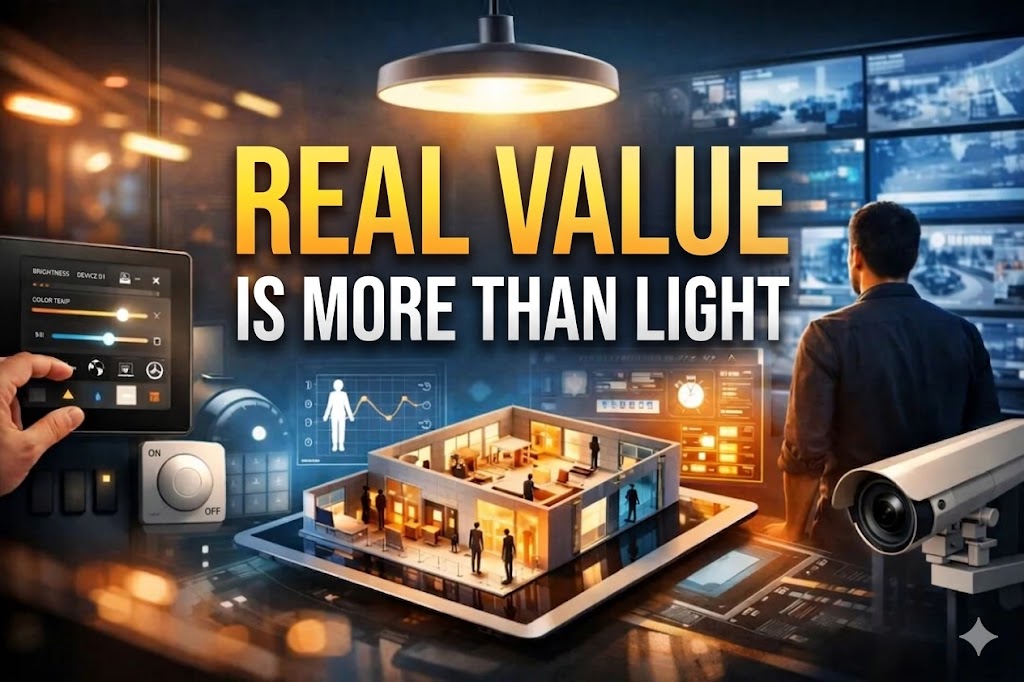
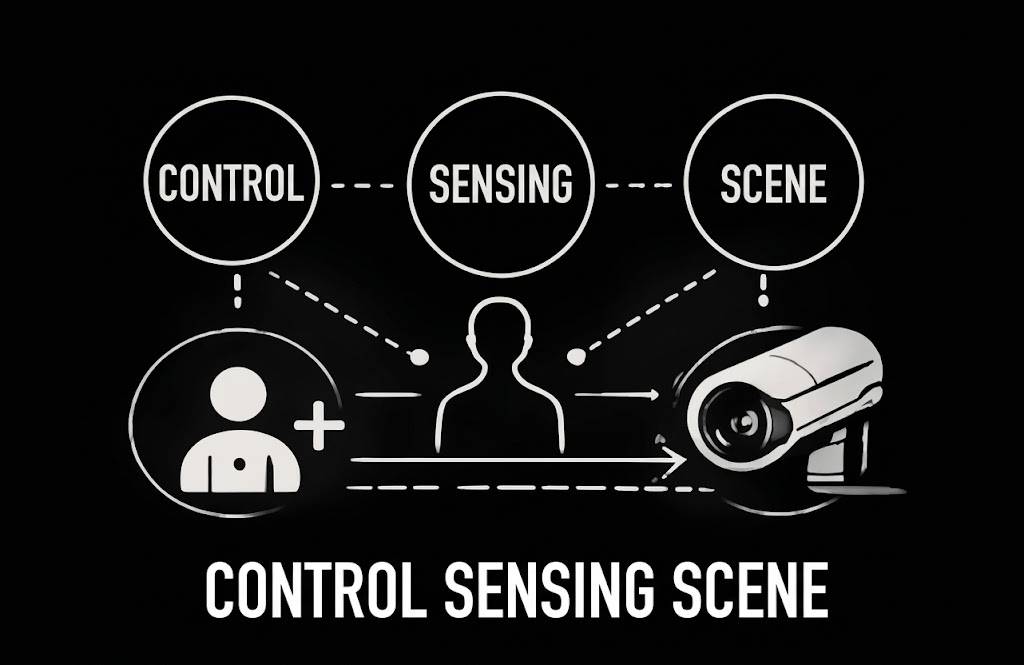
Because the next step—what will really be valuable—is no longer just a single LED, a single fixture, or even a set of prettier parameters. It’s about:
- How control systems are orchestrated
- How sensors perceive the environment
- How scene programs are executed
- How spatial and human-centric models are established
At its core, HCL isn’t about creating a few scenes, drawing a color temperature curve, or slapping the word “healthy” on product packaging.
\What it truly tests is: Can you transform light from a static product into a system that dynamically responds over time, across spaces, activities, and people?
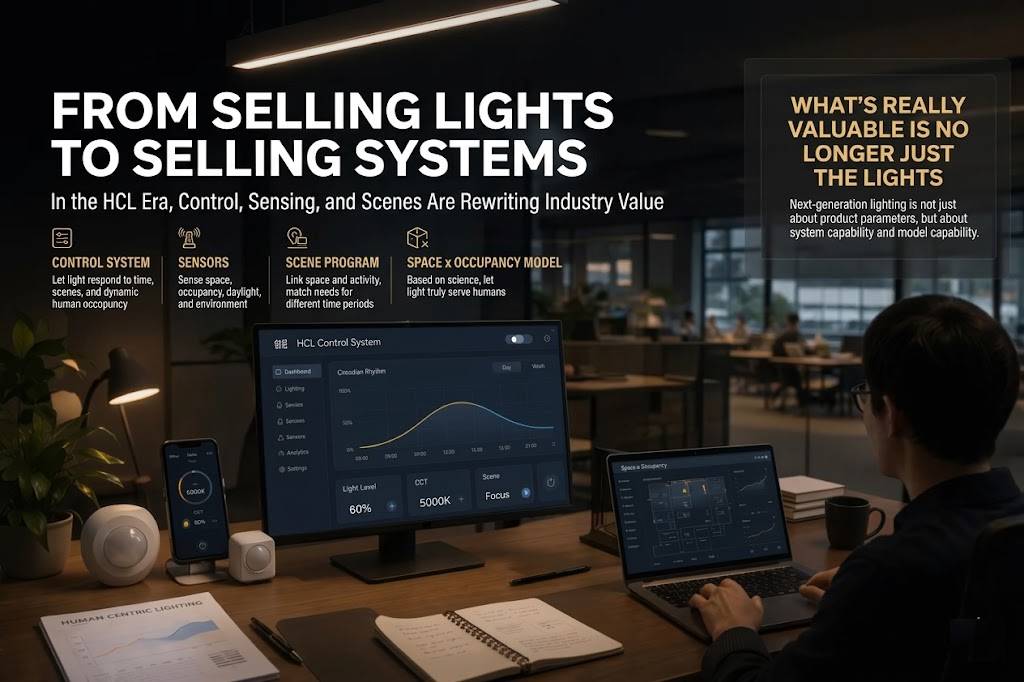
The value of next-generation lighting is shifting from “selling lamps” to “selling system outcomes.” And this, truly, marks a new watershed moment for the industry.
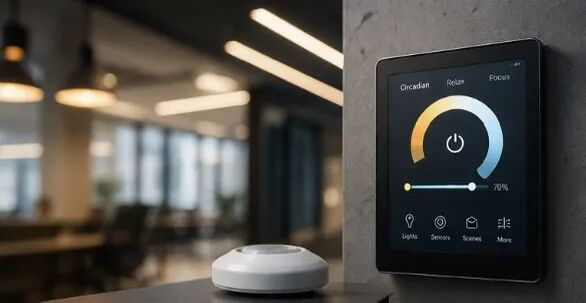
The Next Stage of HCL Is No Longer Just About Light Sources and Fixtures
The real differentiators now are control, sensing, scenes, and the “space × human” model capability.
Preface: Why Talking About Light Sources and Fixtures Alone Is No Longer Enough
As we discussed earlier, if light source companies are still unwilling to provide complete spectral data, and fixture companies are still focused only on luminous efficacy, cost, CRI, and color temperature—the old language of lighting—they will struggle to truly embrace next-generation lighting.
This is not to say that light sources and fixtures are unimportant. On the contrary, they remain critical—they are the foundation, the platform, the starting point.
The issue is:
- Even the best spectrum, if it cannot vary over time, remains just a static output.
- Even the best fixture, if it cannot respond according to space, activity, or people, remains just sophisticated hardware.
But people are not static. Spaces are not static. Activities are not static. And the needs throughout a day are even less static.
An office during the day should not operate under the same lighting logic as a hotel room at night. Morning meetings, focused work, meals, rest, and pre-sleep transitions cannot be managed by a single brightness curve.
So the real question is no longer: “Is this lamp good?”
It is: “Can this system deliver the right light, at the right time, to the right people, in the right space?”
This is the true challenge of the HCL era.
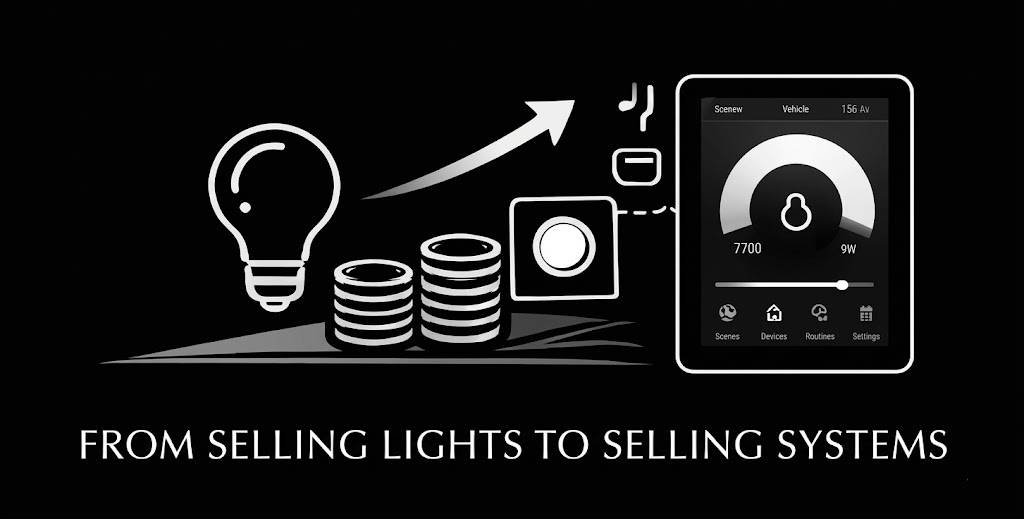
Making Better Lamps Is No Longer Enough. The Next Step Is to Turn Light Into a System.
1. The Essence of HCL Is Not That Lamps Change, but That Light Can Adapt to People, Time, and Space
Today, when many people hear “HCL,” their first associations are still:
- Tunable color temperature
- Smart dimming
- Circadian or rhythm-based scenes
- Tunable white
These are not wrong—but they are only the surface.
The core of HCL has never been “lamps change.” The true question is: Can light adapt according to the relationship between people, space, time, and activity?
At least four variables are involved:
1. Space
What kind of space is this? Office, healthcare, education, senior care, hotel, residential, retail, or exhibition?
Different spaces have different functions, durations of stay, visual tasks, and natural light conditions—so their lighting requirements naturally differ.
2. Activity
What is happening here? Reading, meetings, rehabilitation, dining, relaxation, waiting, inspection, or preparing for sleep?
Different activities require different lighting tasks. Sometimes support for focus is needed, sometimes minimizing distraction, sometimes recognition, sometimes comfort, and sometimes circadian rhythm and recovery.
3. People
Who is in this space? Young office workers, children, elderly, patients, night-shift workers, hotel guests, or short-term visitors?
Different people differ not only in physiological conditions, but also in tolerance, sensitivity, and goals. True human-centric lighting cannot be addressed with a single static scene.
4. Time
What time is it? Morning, daytime, evening, night, or late night? Is it a weekday or weekend? Winter or summer? How much natural light is coming in today?
Even in the same space, light output should vary over time.
Thus, the true goal of HCL is to establish a mapping system: Which person, at what time, in which space, performing which activity, needs what kind of light?
This is the starting point of the methodology.
The Essence of HCL Is Not Dimming or Color Tuning, but Establishing the “Person–Space–Time–Activity” Mapping.
2. Control Systems: The Next Step Is Not Just “Controlling Lamps,” but “Operating Light Environments”
Many lighting control systems today are still stuck in the previous generation mindset:
- On/off switching
- Dimming
- Scheduling
- Grouping
- Panel integration
- Energy-saving control
These are valuable, of course—but if that’s all they do, the system is still far from meeting HCL requirements.
In the HCL era, the true role of a control system is not to control devices, but to operate the light environment. In other words, it should function like a lighting operating system, not just a high-end switch panel.
At a minimum, it should have four capabilities:
1. Orchestration
Not just creating a few fixed scenes, but breaking a space into light strategies across different times, tasks, and zones.
2. Responsiveness
Adjust dynamically based on occupancy, daylight, schedules, behavior, and events—rather than following a single fixed curve.
3. Computation
Convert factors such as illuminance, color temperature, spectrum, vertical eye-level lux, time of day, and duration of stay into control logic.
4. Collaboration
Integrate with blinds, curtains, HVAC, meeting systems, workstation platforms, building management systems, and even wearable devices.
In short, the future competition for control systems will not just be about protocols or UI aesthetics. The real value lies in who can elevate light from the “device layer” to the “human-centric environment layer.”
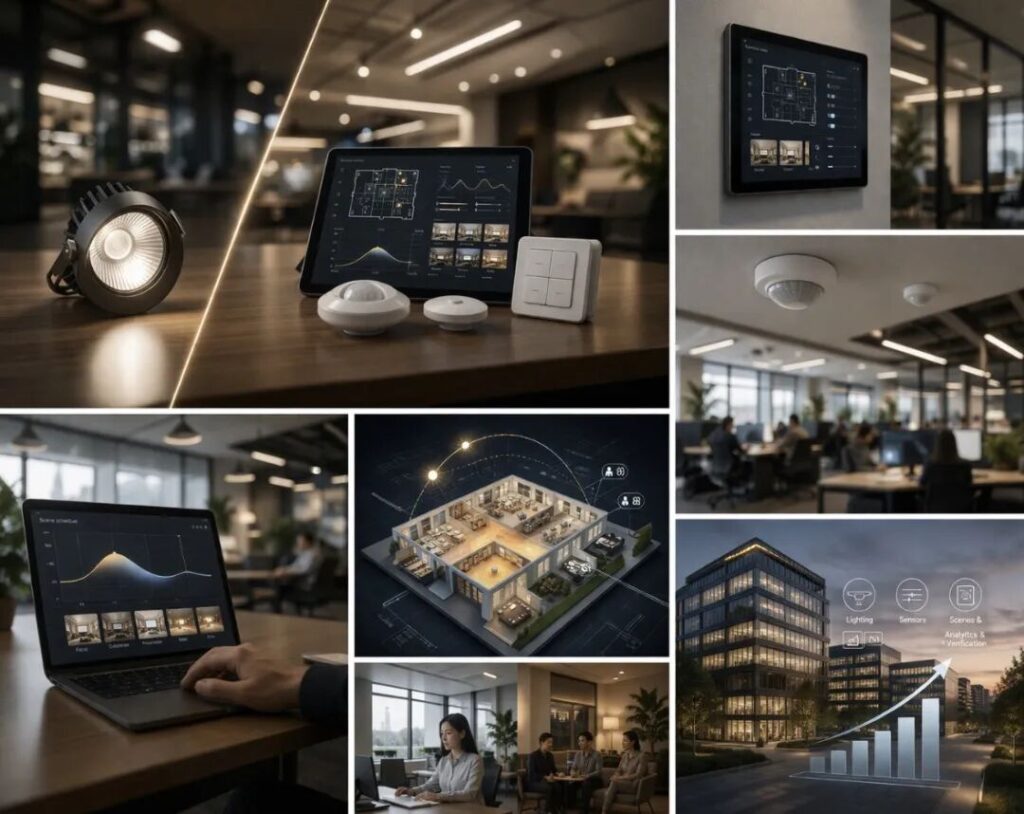
Next-Generation Lighting Control Does Not Just Control Lamps—it Operates the Light Environment.
3. The Value of Sensors Is Not Just Detecting “Presence or Absence,” but Enabling Spaces to Understand People
Today, many projects still have a basic understanding of sensors:
- Turn on the light when someone is present, turn it off when no one is there.
- Dim when there is daylight, brighten when there isn’t.
This is not wrong, but it only achieves automation—it does not truly address human-centric needs. In the HCL era, sensors should not be merely energy-saving accessories; they should serve as the “senses” of the lighting environment system.
I see sensors as falling into at least five categories:
1. Spatial Status
Is anyone present? Where are they? How long will they stay? Are they stationary or moving? Is it a single person or a group?
2. Light Environment
How much natural light is present? What is the vertical illuminance at eye level? Is the background brightness distribution balanced? Is it too bright at night? Is there a risk of glare?
3. Temporal Input
What time is it? When are sunrise and sunset? Is it a night-shift period? Should the system enter a low-interference mode?
4. Scene Triggers
Is a meeting starting? Is a class beginning? Is cleaning underway? Is a guest preparing for sleep? Is there a night patrol?
5. Advanced Human-Centric Input
For example: personal preferences, wearable device data, sleep status, fatigue signals, health goals, etc.
The key shift here is: sensors are not making lights smarter—they are giving spaces the ability to understand people.
In the future, the true high-value capability will not be a single sensor, but the fusion of multiple sources of information.
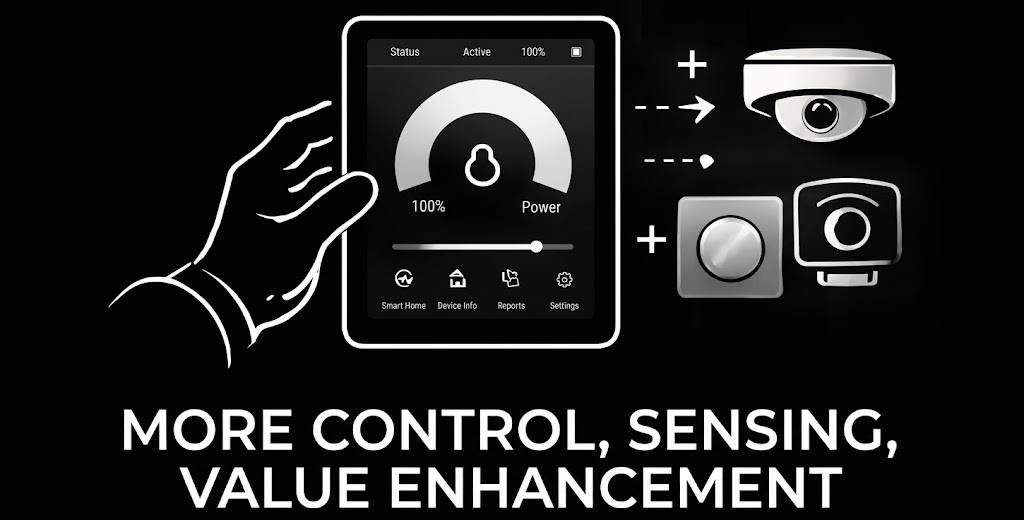
Sensors Do Not Make Lights Smarter.
Sensors Give Spaces the Ability to Understand People.
4. Scene Programs Are Not Presets—they Are the Operating Mechanism of “Light Recipes”
Many manufacturers today claim to offer scene programs, but in reality, these are often just a few presets:
- Meeting mode
- Reading mode
- Nightlight mode
- Presentation mode
This may be basic smart lighting, but it does not qualify as HCL. Truly mature scene programs are not a single button—they are a light program that adapts over time, activity, occupancy, and goals.
They should include at least three layers:
1. Basic Visual Layer
Ensure visibility, safety, comfort, and glare-free conditions—meeting fundamental visual task requirements.
2. Circadian Support Layer
When should daytime stimulation be enhanced? When should nighttime disturbance be minimized? When should vertical eye-level illuminance be prioritized? When should high stimulation be withdrawn?
3. Experience and Branding Layer
“Healthy lighting” does not mean every space should look the same. Hospitals, hotels, offices, retail, and education spaces should each have distinct experiential languages.
Thus, a true scene program is not just: “5000K in the morning, 3000K at night.”
Instead, it is a system that accounts for:
- Different strategy templates for different space types
- Response logic for different activities
- Target curves for different times of day
- Compensation mechanisms for seasonal and daylight variations
- Bias designs for different occupant types
- Manual overrides that do not disrupt overall objectives
Kurz gesagt: scene programs are not just a few parameter sets—they are the operating logic of how light serves people in a space.
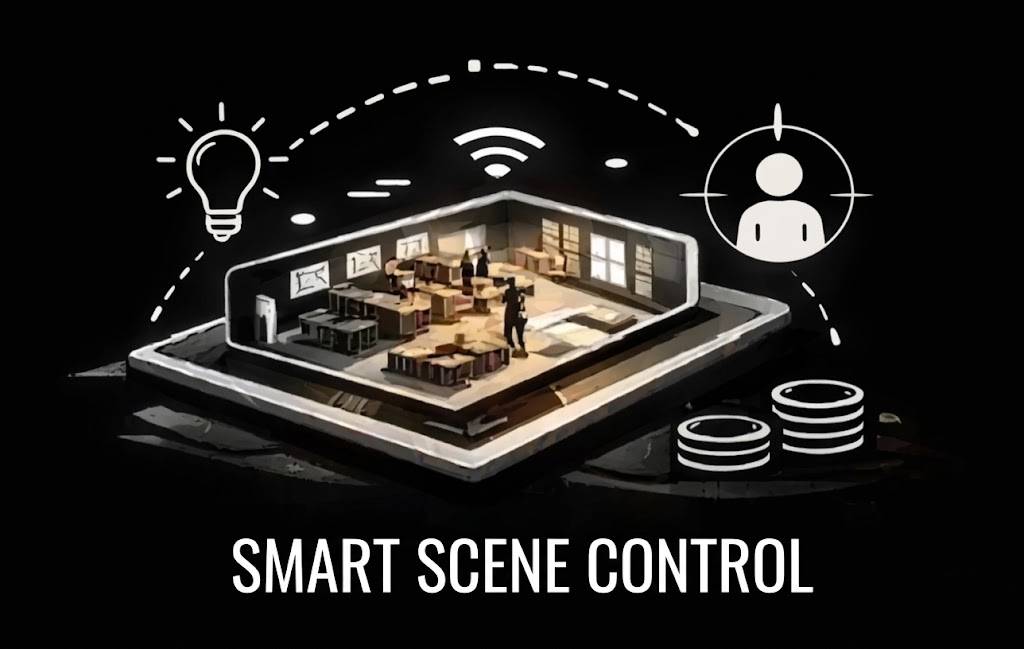
Scene Programs Are Not Just a Few Presets—they Are the Operating Logic of Light Recipes in a Space.
5. Methodology Step 1: How to Build a “Space Model”?
Talking about methodology cannot stay at the level of slogans. To truly implement HCL, you first need to establish a space model.
I see at least five steps:
1. Space Zoning
Break the space into zones: circulation areas, stay areas, task areas, transition areas, display areas, and low-interference nighttime areas. These should not share the same control logic.
2. Perspective Layering
Don’t focus only on horizontal illuminance. What truly relates to human perception often includes: vertical eye-level illuminance, brightness distribution across the field of view, background contrast, and visual-direction stimuli.
3. Temporal Layering
Work hours, rest periods, cleaning times, opening hours, closing hours, and nighttime transitions—these should not rely on a single lighting scheme.
4. Task Layering
Reading, meetings, dining, reception, rehabilitation, rest, night patrol—different tasks have vastly different requirements for visual comfort, alertness, atmosphere, and circadian support.
5. Validation Layering
Design values, system output values, on-site measurements, and user feedback should form a closed loop.
Thus, a space model is not just the drawings—it is a framework that connects design, control, measurement, verification, and optimization.
6. Methodology Step 2: How to Build a “Human-Centric Model”?
If the space model answers: “What light does this space need?”
Then the human-centric model answers: “What light does this person need at this moment?”
A caution: human-centric models are easy to overcomplicate. Many people immediately jump to AI, personalization for thousands of individuals, or “do everything.”
The first step does not need to be so complex. A practical approach should start with grouping.
Layer 1: Group Model
Office workers, elderly, children, patients, night-shift nurses, hotel guests—establish typical strategies for each group first.
Layer 2: Context Model
Morning meetings, focused work, recovery, leisure, pre-sleep, night patrol, short visits—use activities and contexts to drive control logic.
Layer 3: Individual Preference Model
Allow individuals to make local adjustments without compromising overall health objectives.
This is the proper evolution path for a mature system:
Start with groups, then contexts, and gradually move toward individualization.
A Practical Human-Centric Model Does Not Start with All-Knowing AI. It Starts with Groups, Then Contexts, and Gradually Moves Toward Individualization.
7. The Real Industry Opportunities Are Moving Upstream and to Higher Layers
This wave of opportunity does not belong solely to fixture manufacturers. In fact, the higher-margin, higher-barrier, and harder-to-replace segments may not even reside in the lamps themselves.
1. Control System Companies
Those who can upgrade lighting control from “device control” zu “human-centric environment control” are more likely to shape the next-generation market discourse.
2. Sensor Companies
The future product is not just a sensor, but meaningful human-centric input capability.
3. Fixture Companies
Fixtures will evolve from “controlled endpoints” in intelligent nodes that can sense, compute, validate, and collaborate.
4. Software and Algorithm Companies
The real scarcity is not stacking parameters, but translating standards, scenes, spaces, and human needs into executable control logic.
5. Design and Consulting Firms
The value of high-end lighting consultants will not just be making a space look beautiful—it will be delivering space strategies, scene scripts, validation frameworks, and operational logic together.
6. Owners and Operators
This is not about buying another set of equipment—it is about redefining space quality, brand experience, and operational efficiency.
Ultimately, in the next wave, the truly valuable elements are not just products, but: Models + Control + Validation + Operations
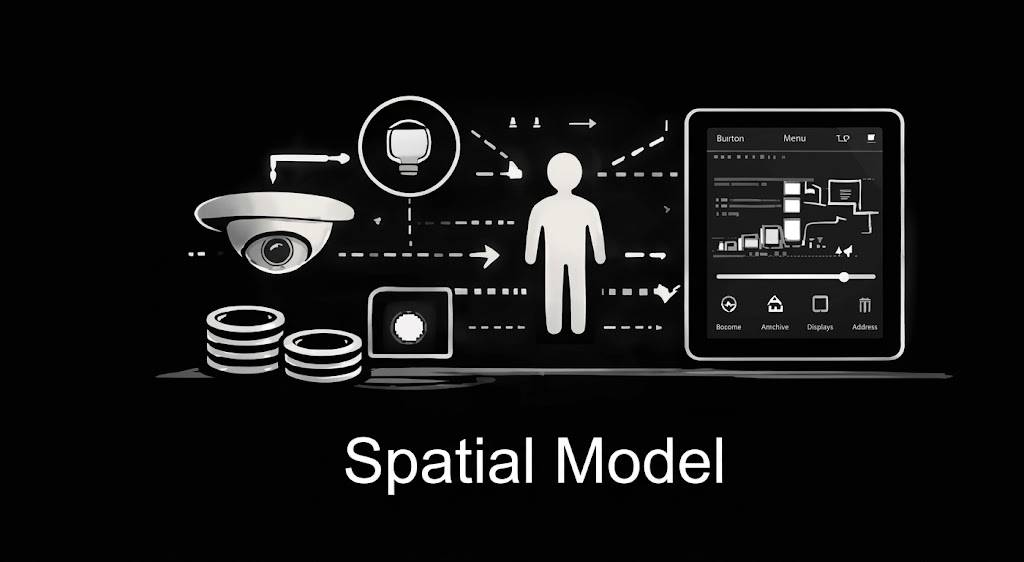
The Next Wave of Value Is Not Just Products—it Is Models, Control, Validation, and Operations.
8. The Next Steps for the Industry: Six Essential Actions
1. Stop Selling Only Lamps—Start Selling “Results”
Future discussions cannot revolve solely around efficacy, color temperature, or CRI. The conversation must include scene capabilities, circadian support, spatial strategies, validation ability, and operational value.
2. Don’t Focus Only on Horizontal Illuminance
Design and verification must incorporate vertical eye-level illuminance, brightness distribution, and the temporal dimension.
3. Establish Standardized Templates: “Space Type × Activity × Time of Day”
This prevents every HCL project from starting from scratch and ensures solutions go beyond surface-level preset scenes.
4. Integrate Control, Sensors, Fixtures, and Design Early
Coordination should start at the conceptual stage, not just when the project is on-site. A mature solution defines models and interfaces from the beginning.
5. Include Measurement and Verification in Delivery
Without on-site measurement and operational verification, much of HCL remains just a story.
6. Integrate Lighting into Building Systems
Lighting can no longer operate in isolation from blinds, HVAC, meeting systems, workstation management, and building platforms.
Conclusion: In the HCL Era, the Real Competition Is Not “Who Can Make Lamps,” but “Who Understands People Better”
I have always believed that the most exciting development in the lighting industry is not pushing a single parameter higher, but the industry finally recognizing one truth:
Light is not an isolated product. It is a relationship between people, space, time, and activity.
In the HCL era, what is truly valuable is no longer a single LED, fixture, or panel. The real value lies in who can integrate:
- Light source capabilities
- Fixture capabilities
- Control capabilities
- Sensor capabilities
- Scene capabilities
with spatial and human-centric models to form a fully operable, verifiable, and optimizable system.
When that happens, lighting will no longer just sell lamps. It will:
- Keep people alert during the day, and calm at night
- Make spaces more comfortable
- Enable buildings to truly serve people
Dies ist die real opportunity in the HCL era.
Closing
Wenn Sie ein light source company, fixture manufacturer, control system provider, sensor company, design consultancy, or building owner/operator, the question you should ask is no longer: “Do I have an HCL product?”
Instead, it is: “Do I have the system capabilities needed for the HCL era?”
The next competitive advantage will not come from slightly brighter lamps or higher parameters. It will come from who can earliest connect the full chain:
Light Source → Fixture → Control → Sensor → Scene → Space → Human
This is not just a product upgrade. It is a fundamental methodological reconstruction of the lighting industry.
About Light Recipe Studio
Light Recipe Studio has long focused on human-centric lighting, healthy lighting, emotional lighting, and quantitative verification of light environments. Its core mission is not merely to discuss “what light to provide,” but to go further:
Which person, at what time, in what space, performing which activity, needs what kind of light?
Our focus is not on individual fixtures or single parameters. Instead, we take a holistic methodological approach—from spectrum, timing, scenes, and control, to spatial models and human-centric models—while continuously advancing core technology R&D, system methodologies, and patent development.
Currently, the Institute has completed multiple patents and ongoing research in areas including:
- Light recipe algorithms
- Emotional lighting
- Spatial and human-centric modeling
- Measurement, verification, and system-level application
Our goal is not just product upgrades, but to help the industry move from “selling lamps” to “selling systems,” and from conceptual discussions to verifiable, implementable, and licensable next-generation lighting capabilities.
We are actively engaging with:
- Fixture manufacturers
- Control system providers
- Sensor companies
- Spatial design teams
- Owners/operators in real estate, healthcare, hospitality, and office spaces
…to explore collaboration in areas such as:
- Technical R&D partnerships
- Patent licensing and technology transfer
- Co-creation of system solutions
- Scene verification and demonstration project implementation
- Brand and product line upgrades
- Consulting cooperation
If you share our belief that the real competition in next-generation lighting is not higher parameters, but complete system capabilities, modeling capabilities, and verification capabilities, we welcome you to engage with us and help drive this next wave of lighting industry advancement.

 English
  Chinese (Taiwan)
  Chinese (China)
  German